Al Siddiq International School

SMP

Kegiatan, SMP

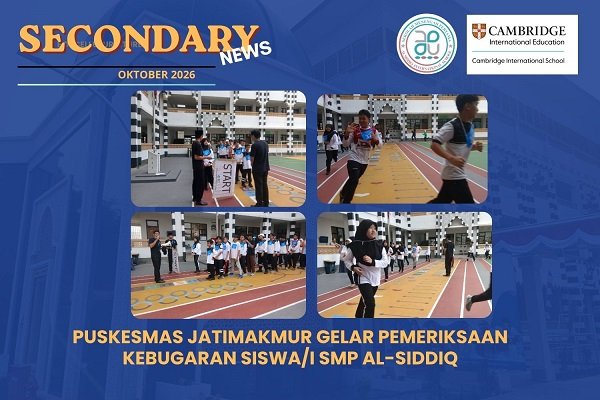
Jatimakmur Community Health Centre Conducts Student Fitness Assessments at SMP Al-Siddiq International

Bekasi, 30 September 2026 — SMP Al-Siddiq International once again organised an activity to support students’ health and physical fitness through a fitness assessment in collaboration with Jatimakmur Community Health Centre (Puskesmas Jatimakmur) on Wednesday, 30 September 2026. The activity took place on the school field and was attended by students as part of the school’s ongoing efforts to raise awareness of the importance of maintaining good health and fitness from an early age.The activity provided students with an opportunity to assess their physical fitness through structured physical exercises. In addition to supporting health education, it also gave students practical experience of the importance of physical activity and a healthy lifestyle.Assessing Physical Fitness and EnduranceOne of the main activities in the fitness assessment was a running test, during which students were asked to complete 11 laps, covering a total distance of approximately 1,000 metres on the school field.The test was designed to provide an indication of students’ physical capabilities, particularly their cardiorespiratory endurance—the body’s ability to use oxygen effectively during physical activity.Throughout the activity, students were also encouraged to pay attention to their bodies’ responses to exercise, including changes in heart rate, breathing, fatigue, and their ability to sustain physical activity.In this way, students were not simply exercising; they were also learning to recognise how their bodies function when engaged in physical activity.Objectives of the Fitness AssessmentThe fitness assessment had several important objectives:

Kegiatan, SMP

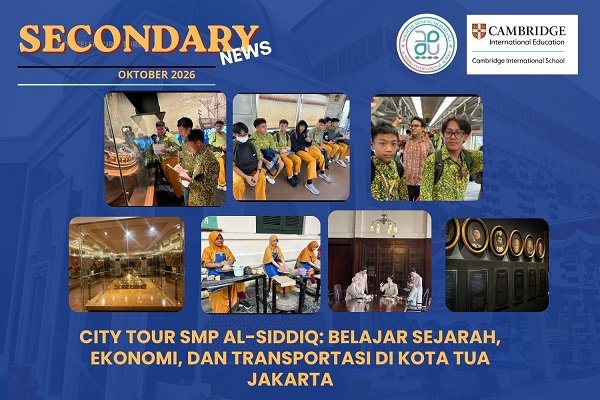
SMP Al-Siddiq City Tour: Exploring History, Economics, Art, and Transport in Jakarta’s Old Town

Jakarta, 29 September 2026 — Learning does not always have to take place inside the classroom. This was experienced first-hand by students of SMP Al-Siddiq during an educational City Tour to Jakarta’s historic Old Town (Kota Tua) on Tuesday, 29 September 2026.Beginning at 8.30 a.m. from Cikunir 1 LRT Station, the activity provided students with a valuable opportunity to learn through direct experience by visiting the Bank Indonesia Museum, Fatahillah Museum (Jakarta History Museum), and an Art Museum.The trip went beyond learning about history. Students were also introduced to the use of public transport, electronic payment systems, the development of Indonesia’s economy, art and culture, and various historical artefacts that form an important part of the nation’s journey.Learning About Public Transport from the Very BeginningThe learning experience began from the moment the journey started. The group travelled by LRT and KRL to reach the Kota Tua area.The use of public transport was deliberately incorporated into the activity so that students would not simply become passengers, but would also gain first-hand experience of how public transport systems operate in an urban environment.Students were also introduced to the use of e-money as a means of payment. This simple experience provided practical learning about the use of technology in everyday life while also developing independence, discipline, and awareness of proper conduct when using public facilities.To ensure that the journey remained safe and well organised, the students were divided into 11 groups, with each group accompanied by a homeroom teacher. This system enabled supervision, guidance, care, and communication with students to be carried out more effectively.Tracing Indonesia’s Economic History at the Bank Indonesia MuseumUpon arriving in Kota Tua, the group visited the Bank Indonesia Museum.At the museum, students had the opportunity to explore the history of Indonesian currency and the national economy throughout different periods. Various collections illustrated the development of means of payment from the arrival of the Portuguese, Spanish, and Dutch, through to the development of Indonesian currency in the modern era.Students observed different forms of currency, including banknotes and coins, as well as various objects related to the history of Indonesia’s financial system.The collection extended beyond currency. Students were also able to see gold bars, securities, sukuk, bonds, and other artefacts illustrating the development of the financial system and the Indonesian economy.The visit helped students understand that Indonesia’s economic journey cannot be separated from the history of trade and the wealth of natural resources found across the archipelago.Commodities such as spices, pepper, cinnamon, coffee, and other agricultural products played an important role in the history of Indonesian trade. These natural resources were even among the factors that attracted foreign nations to the archipelago.By observing the museum collections directly, students were encouraged to understand the connections between natural resources, trade, colonialism, financial systems, and Indonesia’s economic development.Discovering Jakarta’s History at Fatahillah MuseumAfter visiting the Bank Indonesia Museum, the journey continued to Fatahillah Museum, also known as the Jakarta History Museum, located not far from the previous destination.The museum introduced students to Jakarta’s historical journey, from the era of ancient kingdoms through the colonial period.Students were able to observe various historical collections and replicas, including the Ciaruteun Inscription, Tugu Inscription, and Padrão Sunda Kelapa Inscription, all of which are connected to the history of Jakarta and the wider Indonesian archipelago.The museum’s thematic rooms also provided an overview of Jakarta’s development, including the Tarumanegara Room, Jayakarta Room, Fatahillah Room, Sultan Agung Room, and Batavia Room.In addition, students encountered a variety of historical objects, including antique furniture, ceramics, pottery, numismatic collections, weapons, portraits of the Governors-General of Batavia, and a bronze statue of the Roman god Mercury (Hermes).The antique furniture collection, dating from approximately the 17th to the 19th centuries, also demonstrated the meeting of different cultures, including European, Chinese, and Nusantara influences.Witnessing the Legacy of Struggle Up CloseOne of the sections that particularly captured the students’ attention was the underground prison. The space provided an insight into the conditions experienced by prisoners during the colonial period, who had to endure life in confined and dark surroundings.Students also had the opportunity to learn about the part of the museum associated with the history of Prince Diponegoro and his imprisonment before his exile.This experience offered students a different perspective on history. History is not simply about memorising names and dates. It is also a story of people, struggle, hardship, change, and the journey of a nation.Nurturing an Appreciation for Art and Creativity at the Art MuseumThe City Tour continued with a visit to an Art Museum, adding another dimension to the students’ learning experience.While the Bank Indonesia Museum introduced students to economic history and Fatahillah Museum explored Jakarta’s past, the Art Museum provided an opportunity to discover art, culture, creativity, and the ways in which people express ideas through their work.At the museum, students were encouraged to observe various artworks closely. They learnt that art is not simply about beauty, but can also serve as a medium for expressing ideas, experiences, cultural identity, history, and perspectives on life.Seeing artworks directly was also expected to nurture students’ appreciation of art and culture, broaden their horizons, and encourage creativity.For the students, the visit was an opportunity to learn to see things from different perspectives. An artwork can contain different forms, colours, symbols, and meanings, encouraging students to observe, ask questions, think critically, and express their opinions.Thus, the visit to the Art Museum became an important part of the educational journey, bringing together history, economics, culture, and creativity in one enriching experience.The Journey Home: Travelling by KRL and LRT Once AgainAfter completing the entire series of visits, the City Tour concluded at around 2.00 p.m. The group then began the journey home using public transport once again.From the Kota Tua area, the students and accompanying teachers travelled by KRL to Cikoko Station. The journey then continued by LRT from Cikoko Station to Cikunir Station, marking the final destination of the trip.The return journey also provided another opportunity for students to put into practice what they had learnt about
Kegiatan, SMP, Uncategorized

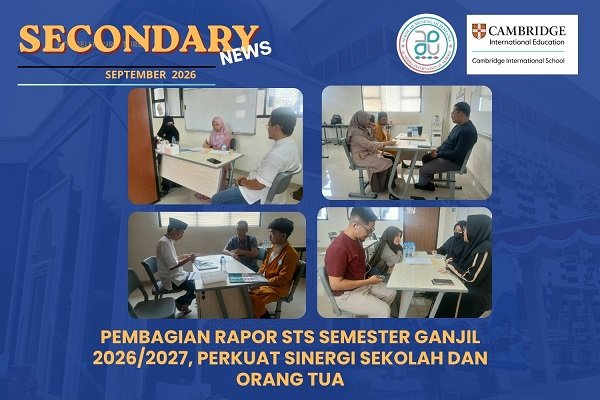
STS Report Card Distribution for the First Semester of 2026/2027: Strengthening Synergy Between School and Parents

Bekasi, 25 September 2026 — SMP Al-Siddiq International held the Sumative Mid-Term Assessment (STS) Report Card Distribution for the First Semester of the 2026/2027 Academic Year on Friday, 25 September 2026. This activity served as an important part of the evaluation process and communication of learning outcomes between the school, students, and parents or guardians.The distribution of STS report cards was not merely a moment to communicate students’ academic achievements, but also provided an opportunity for teachers and parents to discuss and better understand their children’s competency development, character, and learning progress throughout their time at school.From the morning, parents and guardians were warmly welcomed by the school. The meeting served as a bridge for building stronger communication and synergy between the school and families. Through effective communication, the school hopes that parents will continue to provide guidance, motivation, and attention to their children’s learning development at home.The report card distribution took place in an orderly, smooth, and enthusiastic atmosphere. Parents received information about their children’s learning outcomes while also having the opportunity to discuss their development and learning needs with teachers.The implementation of the STS and the distribution of report cards are part of SMP Al-Siddiq International’s commitment to fulfilling the school’s vision:“To become a globally minded Islamic school that develops a Qur’anic generation with strong knowledge of science and technology, an entrepreneurial spirit, and a commitment to protecting the environment.” Therefore, the learning outcomes presented in the report cards are not viewed merely as numbers or academic achievements, but as a broader reflection of each student’s overall development. The school continues to strive to nurture students’ potential so that they not only achieve strong academic results, but also develop noble character, independence, creativity, critical thinking skills, leadership qualities, and environmental awareness.The STS report card distribution for the First Semester of the 2026/2027 Academic Year served as an opportunity for reflection between the school and parents. The achievements attained are both an appreciation of students’ efforts and a foundation for making improvements and strengthening the learning process in the future.Through continuous synergy between the school, teachers, parents, and students, SMP Al-Siddiq International remains committed to providing globally minded Islamic education that prepares a generation that is Qur’anic, knowledgeable, well-rounded, creative, independent, and ready to face the challenges of the future.By Retno Suzanne Handayani, Lc, M.Pd

Kegiatan, SMP

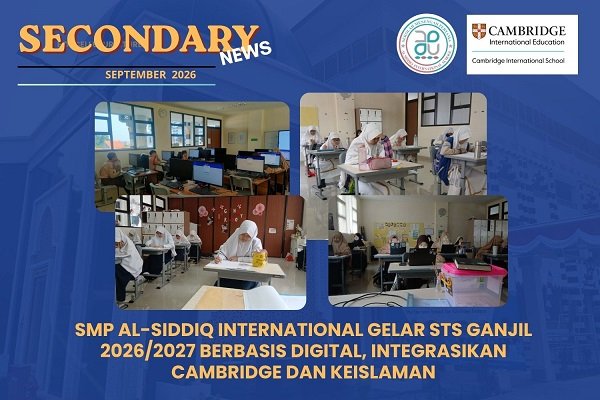
SMP Al-Siddiq International Holds Digital STS for the First Semester of 2026/2027, Integrating Cambridge and Islamic Education

Bekasi, 21 September 2026 — SMP Al-Siddiq International conducted the Mid-Semester Summative Assessment (Sumatif Tengah Semester/STS) for the First Semester of the 2026/2027 Academic Year from 14–21 September 2026. The assessment was attended by all students according to their respective year groups and was conducted using a Learning Management System (LMS), while integrating English in Cambridge-based subjects and Arabic in Islamic education. The STS is an important part of the learning evaluation process, designed to measure students’ competency attainment at the midpoint of the semester. Rather than assessing academic knowledge alone, the assessment programme was also designed to strengthen students’ digital skills, language abilities, and Islamic values. Digital Assessment: Developing Students’ Technological Skills Unlike traditional examinations that rely entirely on printed question papers, this year’s STS at SMP Al-Siddiq International was conducted digitally through the Learning Management System (LMS). Students completed their assessments using the system prepared by the school. This approach forms part of the school’s efforts to familiarise students with the use of technology in academic activities, while encouraging them to become more independent, organised, and responsible throughout the assessment process. The use of technology also supports the educational approach of SMP Al-Siddiq International, which combines the development of knowledge and technological skills with Islamic education. English for Cambridge, Arabic for Islamic Education The integration of a global perspective was also evident throughout the STS. In Cambridge-based subjects, students completed their assessments using English. The use of English helps students become accustomed to learning materials and assessment instructions within an international education context. Meanwhile, Arabic was used in Islamic education subjects as part of the effort to strengthen students’ ability to understand Islamic terminology, learning materials, and Islamic sources. Through this approach, the assessment process serves not only as a means of measuring learning outcomes but also as an opportunity to develop students’ language skills and broaden their knowledge and understanding. STS Goes Beyond Written Assessments One of the distinctive features of the STS at SMP Al-Siddiq International is the inclusion of an oral BBQ (Bimbingan Baca Qur’an) assessment as part of the overall evaluation programme. The oral BBQ assessment focused on the memorisation of selected Qur’anic surahs. This assessment complemented the academic evaluation by incorporating aspects of spiritual development and Islamic character. Through this evaluation, the school seeks to ensure that education is not focused solely on cognitive abilities but also provides opportunities to strengthen students’ relationship with the Qur’an, spirituality, and Islamic character. Measuring Achievement, Building Character Throughout the STS, all students participated in the assessment programme in an orderly and conscientious manner. Teachers and the organising committee also worked to ensure that the entire process was conducted in accordance with the established procedures. Parental support was also an important part of creating a conducive learning environment during the STS. Collaboration between the school and families is expected to help students prepare themselves effectively, both academically and in terms of character development. Overall, the First Semester STS for the 2026/2027 Academic Year was conducted smoothly, orderly, and in a conducive atmosphere. For SMP Al-Siddiq International, the STS is not simply an opportunity to measure students’ academic results. More importantly, it forms part of the school’s educational process in developing a generation capable of integrating knowledge, technology, language skills, the Qur’an, and Islamic character. Through this integration, the school continues to work towards its vision: “To become a globally minded Islamic school that develops a Qur’anic generation with strong knowledge of science and technology, an entrepreneurial spirit, and a commitment to protecting the environment.” The STS programme is expected to serve as a valuable opportunity for students, teachers, and parents to reflect on the progress that has been achieved, while identifying areas for improvement and preparing for the next stage of the learning process.Retno Suzanne handayani, Lc, M.Pd

Kegiatan, SMP

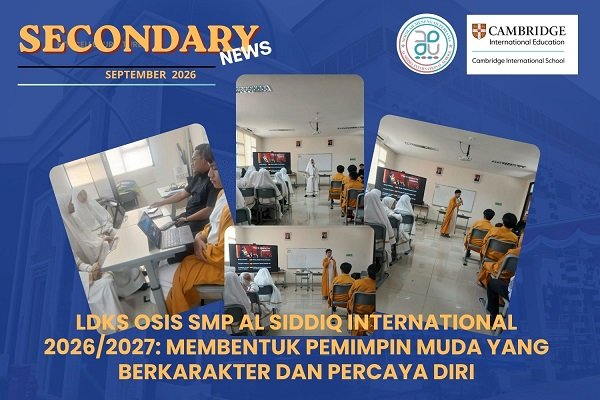
LDKS OSIS SMP Al Siddiq International 2026/2027: Developing Confident Young Leaders with Strong Character

Bekasi, 18 September 2026 — SMP Al Siddiq International held the Student Leadership Basic Training (Latihan Dasar Kepemimpinan Siswa/LDKS) for the OSIS Student Council for the 2026/2027 Academic Year on Friday, 18 September 2026. The activity took place in the Year 8 and Year 9 Boys classrooms and was attended by students of SMP Al Siddiq International. LDKS is an important programme designed to prepare prospective OSIS committee members with essential leadership skills, communication abilities, organisational skills, and the confidence to take on roles and responsibilities in running the student organisation. Dhikr and Prayer to Begin the Programme The programme began with dhikr and a collective prayer as an expression of hope and effort that the entire LDKS programme would run smoothly and provide meaningful benefits for all participants. The opening session was then followed by a Qur’anic recitation (tilawah Al-Qur’an) delivered by Muhammad Kautsar. The atmosphere became even more solemn as all SMP Al Siddiq International students joined together in singing the Indonesian national anthem, “Indonesia Raya”. Opening Remarks: Leadership Begins with Oneself The programme continued with opening remarks from Mrs Robiah Adawiyah, M.Pd. In her remarks, she emphasised that leadership is not simply about the ability to lead others, but first and foremost about the ability to lead oneself. A leader needs to demonstrate responsibility, discipline, courage in making decisions, teamwork, and positive role modelling through their attitudes and actions. Therefore, LDKS is intended to provide students with an opportunity to learn how to take responsibility for their duties, respect others, and have the confidence to take an active role within the school environment. Public Speaking Session: Building Confidence and Overcoming Stage Fright The first session focused on Public Speaking, delivered by Mr Arief Reza, S.S. The session lasted approximately two and a half hours and involved more than simply presenting theoretical material. Students were given the opportunity to practise their public speaking skills directly in front of the class. One by one, participants came to the front of the classroom to practise public speaking. After each performance, participants received feedback, evaluation, and suggestions for improvement. This enabled them to identify areas that could be developed, including confidence, articulation, intonation, body language, eye contact, and the way they presented their ideas. Interestingly, the session brought out a variety of experiences among the participants. Some students experienced stage fright and nervousness when they first stood in front of their classmates. Nevertheless, they made an effort to overcome their nervousness and continued trying. Others performed with confidence, while several participants already demonstrated fairly strong public speaking abilities. These different experiences became an important part of the learning process. Students learnt that effective public speaking requires not only knowledge but also the courage to try, openness to feedback, and a willingness to continue improving. Through this practical session, participants were expected to develop stronger public speaking skills and become more confident when expressing ideas, leading meetings, giving presentations, or speaking in front of larger audiences. Character-Based Leadership The programme continued with a session on Character-Based Leadership. During this session, participants were encouraged to understand that a leader needs more than technical leadership skills. Leaders must also possess strong character, including integrity, responsibility, discipline, honesty, care for others, teamwork, and the ability to serve as positive role models. These qualities form an important foundation for OSIS committee members, enabling them to carry out their organisational responsibilities effectively while becoming positive examples for other students. Organisation Management and Work Programmes At 12.00 p.m. WIB, the programme entered the break for prayer and lunch (ISHOMA). Following the break, all participants resumed the LDKS programme at 1.00 p.m. WIB with a session on Organisation Management and Work Programmes. The third session was delivered by Amal Dzikrullah, M.Pd. During this session, participants learnt how an organisation can operate effectively through the distribution of responsibilities, coordination, communication, programme planning, and cooperation among committee members. Participants were also encouraged to understand that a work programme should not simply be based on an interesting idea. It needs to be developed systematically and realistically, with clear objectives, defined responsibilities, an implementation schedule, and an evaluation process. This training is expected to help prospective OSIS committee members develop and implement work programmes that are creative, well organised, purposeful, and beneficial to the entire school community. Organisational Meeting Procedures The fourth session focused on Organisational Meeting Procedures, delivered by Mrs Retno Suzanne Handayani, Lc., M.Pd. This session provided participants with an understanding of organisational meeting procedures, including how to participate in meetings in an orderly manner, understand discussion mechanisms, express opinions, and uphold the rules and ethics of organisational forums. Understanding meeting procedures is an important skill for OSIS committee members, as students will encounter various forums when discussing programmes, making decisions, and addressing organisational matters. Closing the LDKS Programme After all the training sessions had been completed, the LDKS OSIS SMP Al Siddiq International 2026/2027 programme concluded with a prayer led by Ustadz Ahmad Toha, M.Ag. The entire programme was filled with enthusiasm and meaningful learning experiences. Participants gained not only knowledge about leadership and organisation but also practical experience in public speaking, teamwork, receiving feedback, overcoming nervousness, and having the courage to take on responsibilities. Through this LDKS programme, SMP Al Siddiq International hopes that the prospective OSIS committee members for the 2026/2027 period will be able to carry out their organisational responsibilities effectively and help develop OSIS into an increasingly active, creative, productive, and impactful student organisation. More than simply preparing students to become members of an organisation, LDKS is expected to serve as an important first step in developing a generation of young people with leadership skills, strong character, effective communication abilities, confidence in public speaking, teamwork, and a strong sense of responsibility. With these skills and values, students are expected to grow into individuals who are not only capable of leading an organisation but are also able to lead themselves, confidently express their ideas, and make positive contributions to their school and wider community.By Retno Suzanne

Kegiatan, SMP, Uncategorized

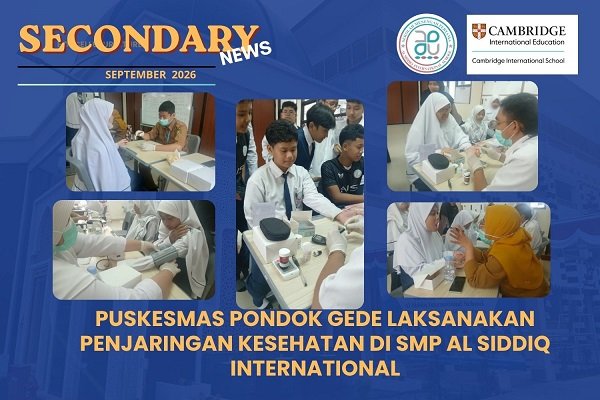
Pondok Gede Community Health Centre Conducts Student Health Screening at SMP Al Siddiq International

Bekasi, 14 September 2026 – SMP Al Siddiq International welcomed a team from the Pondok Gede Community Health Centre (Puskesmas Pondok Gede) to conduct a student health screening as part of the School Health Programme (UKS). The activity was part of a joint effort to monitor students’ health and physical development, as well as to detect health issues at an early stage that could affect their comfort and learning process at school. The visiting team from Puskesmas Pondok Gede was warmly welcomed by the Head of SMP Al Siddiq International, Mrs Robiah Adawiyah, M.Pd. The school welcomed the activity as an example of positive collaboration between educational institutions and health services in supporting students’ health and well-being. The screening was conducted gradually and in rotation in the Year 9 Boys classroom. The examination began with the male students and was then followed by the female students. This arrangement was intended to ensure that the entire screening process could take place in an orderly, comfortable, and conducive environment. Monitoring Students’ Growth and Nutritional Status As part of the health screening, Puskesmas staff conducted physical examinations and monitored students’ nutritional status by measuring their weight and height. These measurements formed part of the monitoring of students’ physical growth. The health team also checked personal hygiene, including the condition of students’ hair, nails, skin, and ears. In addition, eye and ear examinations were carried out. The eye examination included a visual acuity test to identify potential vision problems that could affect students’ ability to participate in learning. The ear examination assessed the condition of the ears and checked for possible hearing difficulties. Dental and Oral Health Examination Dental and oral health were also included in the screening process. Health officers examined students’ teeth and gums, including checking for possible dental caries, tartar, and gum problems. If any condition requiring further attention was identified, students could receive recommendations or referrals to obtain appropriate healthcare services at the Puskesmas. School Environmental Health Inspection The health team from Puskesmas Pondok Gede also paid attention to the health and safety of the school environment. Following the occurrence of volcanic ashfall, the Environmental Health/Sanitation Officer from the Puskesmas inspected the school environment and water facilities. The inspection was carried out to ensure that the school environment remained safe and supportive of the health of the entire school community. The officer checked the physical condition of the water from the school taps and water sources, including any possible changes in colour, sediment, or odour. The condition of the water tank and water storage facilities was also inspected, including ensuring that the storage containers were properly covered. If any indication of contamination was identified, the school would receive appropriate follow-up guidance from the Puskesmas based on the findings from the inspection. Education on Handling Volcanic Ash The environmental inspection also included guidance on dealing with volcanic ash that had accumulated around the school premises. The health officers provided advice on appropriate cleaning methods to prevent the ash from becoming airborne and being inhaled. The ash should be dampened with water before cleaning so that the particles do not easily become airborne. The inspection also considered the condition of classrooms, windows, doors, and ventilation systems to ensure that there was no accumulation of ash that could affect indoor air quality. In rooms equipped with air conditioning, attention was also given to the cleanliness of the air filters. Immunisation Services for Female Students The programme was then followed by immunisation services for female students, according to the screening results, immunisation status, age, and the requirements of the Puskesmas programme. This immunisation service formed part of the school’s efforts to protect students’ health, including HPV vaccination for eligible female students in accordance with the applicable immunisation programme requirements. Strengthening Collaboration Between the School and Puskesmas The student health screening at SMP Al Siddiq International demonstrated the positive collaboration between the school and Puskesmas Pondok Gede in promoting a healthy lifestyle within the educational environment. Through this activity, the school demonstrated its commitment not only to students’ academic development but also to their physical health, personal hygiene, dental and oral health, sensory health, nutritional status, and the health of the school environment. SMP Al Siddiq International extends its appreciation to Puskesmas Pondok Gede for conducting the student health screening and providing environmental health education. It is hoped that this collaboration will continue to grow, creating a healthy, safe, comfortable, and supportive school environment that enables students to learn and develop to their full potential.By Reto Suzanne handayani, Lc, M.Pd

Kegiatan, SMP

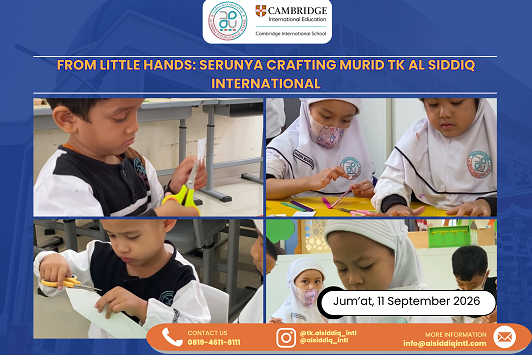
From Little Hands: The Joy of Crafting at Al Siddiq International Kindergarten

On Friday, 11 September 2026, students from Kindergarten A and Kindergarten B at Al Siddiq International took part in a Crafting activity held in the Dining Room. The activity formed part of the school’s art learning programme, giving students an opportunity to explore their creativity through hands-on artistic activities. In a fun and interactive learning atmosphere, the children were encouraged to express their ideas while developing a range of skills that support their overall growth and development. Crafting is not only about producing an artwork. It also provides important benefits for children’s fine motor development. While making crafts, students use their hands and fingers in a variety of ways, including holding, cutting, sticking, positioning, and completing small details of their creations. These activities help develop hand-eye coordination and strengthen the small muscles in the hands and fingers, which are important for children’s readiness to engage in writing activities. A Structured Morning Routine Before beginning the main activity, the students took part in a structured morning routine. The day began from 08.00–08.10 with lining up, followed by Journaling from 08.10–08.30. Through journaling, students had the opportunity to express their experiences, ideas, or feelings through drawings and early writing, according to their individual stages of development. The activity continued with Qur’an learning and Murojaah from 08.30–09.00, as part of the students’ daily routine and the reinforcement of their Islamic learning. From 09.00–09.30, the students performed the Duha Prayer. This was followed by Snack Time and Toilet Time from 09.30–10.00. This series of activities helped the children develop positive habits, from following routines in an orderly manner and maintaining personal hygiene to learning how to meet their own needs independently. Creating a Pencil-Shaped Keychain The main activity took place from 10.00–10.30, when the students made a pencil-shaped keychain. The children followed the teacher’s instructions and created their crafts using their own hands. Throughout the process, they were encouraged to work carefully, follow simple steps, and use hand-eye coordination when arranging and completing their creations. At the same time, each child was given the freedom to enjoy the creative process and express their creativity in their own way. Creating a pencil-shaped keychain provided the students with an enjoyable yet meaningful learning experience. The pencil-inspired design was also closely connected to their everyday learning activities. Through this activity, the children learnt not only about art and creativity but also developed hand skills that will support their academic activities, particularly as they continue developing their early writing abilities. Learning Through Creativity Once the Crafting activity was completed, the learning programme concluded at 10.30, before the students prepared to go home. Through activities such as this, Al Siddiq International continues to provide a holistic learning experience by combining academic learning, Islamic routines, creativity, and motor skill development. The Crafting activity also taught the Kindergarten A and Kindergarten B students that creating something is not simply about the final result. It is also about the process of trying, exploring, creating, and completing something through their own efforts. A simple activity such as making a pencil-shaped keychain can therefore become a meaningful part of children’s development, while also nurturing their confidence and love of learning. Little hands, big creativity, meaningful learning!By Inka Amalia, S.Pd

Kegiatan, SMP

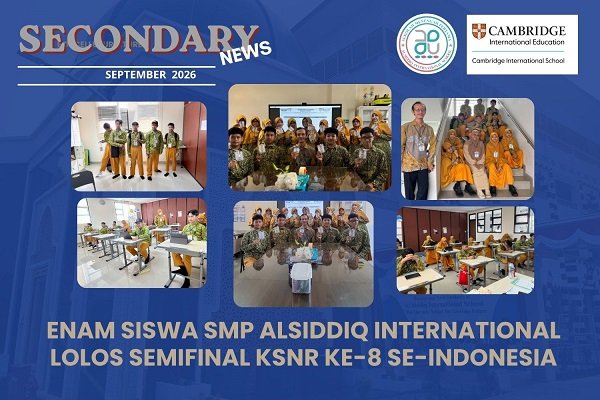
Six Al Siddiq International Secondary School Students Reach the 8th National KSNR Semifinals

Alhamdulillah, Al Siddiq International Secondary School has once again achieved an outstanding accomplishment through the success of six students in the 8th Kompetisi Sains Nalaria Realistik (KSNR), a national-level competition. All six students have qualified for the national KSNR 8 semifinals, demonstrating their reasoning abilities, dedication to learning, and enthusiasm for competing at national level. The 8th KSNR competition was held online on Saturday, 12 September 2026, allowing participants to take part from their respective schools. At Al Siddiq International Secondary School, the competition was conducted on the school premises with teacher supervision and support. The six Al Siddiq International Secondary School students who successfully qualified for the semifinals are: Cordelia Elodie – Grade 8Muhammad Alvaro Siregar – Grade 8Muhammad Kautsar – Grade 9Khalisa Adinta Rukmiputri – Grade 9Raisafa Saffir Audyra – Grade 9Alanza Lareina Clarissa – Grade 9 Throughout the competition, the students received dedicated and intensive guidance from Mr Muhammad Fathul Ihsan, M.Res., Science teacher at Al Siddiq International Secondary School. KSNR is a competition designed to develop students’ ability to reason, analyse, think critically, and solve problems logically and realistically. Participation in this national-level competition is one of Al Siddiq International Secondary School’s efforts to provide students with opportunities to develop their academic potential while also building the confidence and courage to compete at a wider level. The success of these six students is certainly a source of pride for the school. This achievement is also the result of the students’ dedication and determination, the guidance provided by their teacher, and the support of their parents. The entire Al Siddiq International Secondary School community extends its warmest congratulations and highest appreciation to Cordelia, Alvaro, Kautsar, Khalisa, Raisafa, and Reina for their achievement. May Allah SWT grant them ease, confidence, tranquillity, and the best possible results in the upcoming semifinal round. May this achievement inspire all students of Al Siddiq International Secondary School to continue learning, pursuing excellence, and developing their abilities in a wide range of fields. Best of luck in the KSNR 8 semifinals! Keep reasoning, keep learning, and keep achieving!By Retno Suzanne Handayani, Lc, M.Pd

Kegiatan, SMP

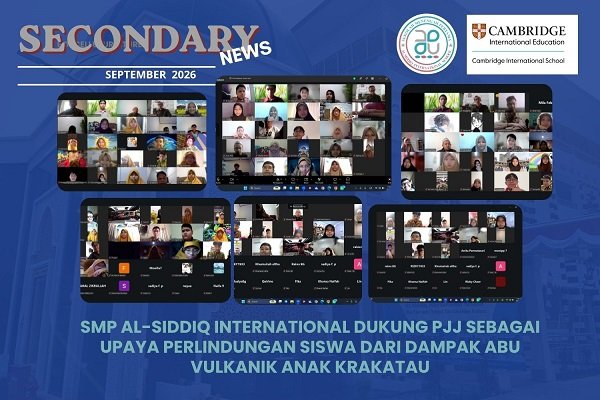
Al-Siddiq International Secondary School Supports Distance Learning as a Protective Measure for Students from the Impact of Volcanic Ash from Anak Krakatau

In Bekasi, Al-Siddiq International Secondary School supports the policy of the Bekasi City Education Office to implement Distance Learning (PJJ) as a precautionary measure to protect the school community from potential exposure to volcanic ash following the eruption of Anak Krakatau. The policy is implemented in accordance with Circular Letter of the Bekasi City Education Office Number 400.3/6/DISDIK.SER, as part of a collective effort to safeguard the safety and health of students and the entire school community. Exposure to volcanic ash requires particular attention because its particles can affect health, especially the respiratory system, eyes, and skin. Volcanic ash can irritate the respiratory tract and cause symptoms such as coughing, irritation of the nose and throat, and shortness of breath. Fine particles can also penetrate deeper into the lungs and cause inflammation. In addition, ash can cause red, sore, itchy, and watery eyes, as well as skin irritation. Children are among those who require particular attention when exposed to volcanic ash. In response to this situation, Al-Siddiq International Secondary School is taking part in preventive measures by conducting lessons online. In this way, students can continue their education without having to participate in face-to-face learning activities on the school premises while the Distance Learning policy is in effect. Distance Learning Begins with Dhikr and a Religious Talk Interestingly, Distance Learning at Al-Siddiq International Secondary School does not focus solely on academic achievement. The programme begins with collective dhikr as a form of spiritual effort, while also helping students develop a sense of calm and strengthen their closeness to Allah SWT. Following the collective dhikr, the programme continues with religious talks featuring two important topics aimed at supporting students’ character development. The first session is delivered by Mr Abdul Azis, S.Pd., entitled “Three Pillars for Building Good Character”. The session provides students with an understanding of the importance of developing good character as a foundation for life, both in their relationship with Allah SWT, their relationships with others, and in fulfilling their responsibilities as students. The next religious talk is delivered by Ustaz Ahmad Toha, entitled “Renewing Our Intention”. The session reminds students that every activity, including learning, should be based on a good and sincere intention. With the right intention, learning becomes more than an activity aimed at achieving academic results; it can also become an act of worship and a process of developing into a better person. Both religious talks provide valuable spiritual nourishment for the students, while strengthening character education and religious understanding, which are important elements of education at Al-Siddiq International Secondary School. Continuing with Qur’an and Academic Learning Following the religious activities, Distance Learning continues with Qur’an learning. This forms part of the school’s effort to maintain a balance between academic education and Islamic education. Students then participate in a range of academic lessons, including: EnglishCivicIslamic StudiesICT Although the lessons are conducted online, the essence of education and learning continues to be maintained. Teachers continue to deliver learning materials, guide students, and ensure that students are able to participate in the learning process effectively. The implementation of Distance Learning demonstrates that particular circumstances do not have to become a barrier to the school’s commitment to providing educational services. Through online learning, the school can continue its academic programme while giving students an opportunity to learn in a safer environment. Protecting Safety, Sustaining Education The implementation of Distance Learning at Al-Siddiq International Secondary School is a clear expression of the school’s commitment to making students’ safety and health a priority without compromising the continuity of their education. The school is not only taking steps to protect students from potential exposure to volcanic ash, but also ensuring that, while at home, they continue to receive academic education, Qur’anic guidance, character development, and religious instruction. In this way, Distance Learning is not simply an opportunity to study from home. It also becomes a valuable moment to teach students about taking appropriate measures, discipline, concern for health, resilience, and the importance of drawing closer to Allah SWT in every circumstance. Al-Siddiq International Secondary School remains committed to providing holistic education by developing knowledge, building character, and safeguarding the wellbeing of its students. “Protecting safety is an effort, sustaining education is a trust, and the two can go hand in hand.” Available next action:Create a downloadable PDF file here in this chat containing the finalized decisions and immediate actions aboveBy Retno Suzanne Handayani, Lc, M.Pd

Kegiatan, SMP

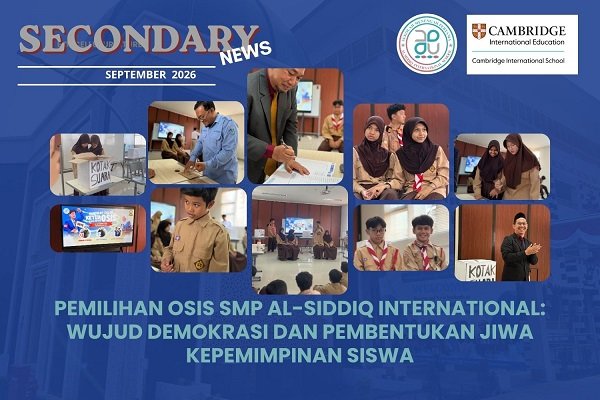
Al-Siddiq International Secondary School OSIS Election: Promoting Democracy and Developing Student Leadership

Bekasi, 31 August 2026 — Al-Siddiq International Secondary School held an important student leadership development programme through the Election of the OSIS President and Vice President for the next term of office on Monday, 31 August 2026. The election marked the transition of leadership from the outgoing OSIS committee to a new generation of student leaders who are expected to bring fresh enthusiasm, innovation, and positive contributions to the development of the school. The election took place in the Grade 8 and 9 Boys classroom and was filled with enthusiasm. The entire programme was attended by students, teachers, and staff of Al-Siddiq International Secondary School. The activity began with a prayer, followed by opening remarks from the Head of Al-Siddiq International Secondary School, Mrs Robiah Adawiyah, M.Pd. Three candidate pairs competed in this year’s election: Candidate Pair 1Armila Khanza & Kanaya Bilqies Candidate Pair 2Cordelia Elodie & Kamaila Zufaira Candidate Pair 3Muhammad Al-Varo Siregar & Adrian Jagat Al-Fatara All three candidate pairs attended the event in person and took their designated places. Each candidate presented constructive visions and missions focused on the advancement of students and the school. The ideas presented by the candidates included efforts to improve various programmes and activities at Al-Siddiq, develop creative students, encourage critical thinking, promote academic excellence, and help students adapt to technological developments. This demonstrated that the OSIS election was not merely an opportunity to choose student leaders, but also a platform for students to learn how to express ideas, compete fairly, take responsibility, and participate in democratic life within the school environment. The voting process was conducted in an orderly manner. Each participant who cast their vote received an ink mark on their finger as proof that they had exercised their voting right. The students participated enthusiastically while maintaining order, allowing the entire election process to proceed in a respectful and organised manner. The event also received direct support from the school leadership team. Those in attendance included School Director Mr Ginanjar Citra Cimarga, M.Pd.; Head of Primary School Mrs Reni Oktavia, M.Pd.; Head of Kindergarten Mrs Itoh Sugiharti, S.E., S.Pd.; and Islamic Affairs Division representative Mr Abdullah Haris, M.Pd. The presence of leaders from different school levels demonstrated that student leadership development and character building are shared priorities across the Al-Siddiq educational community. Another noteworthy aspect of the election was the involvement of the outgoing OSIS committee as part of the election organising team. Their involvement symbolised a healthy leadership succession process while providing the outgoing committee with valuable experience in organising a democratic event and handing over the leadership baton to the next generation. After the voting and vote-counting processes had been completed, the results were as follows: Candidate Pair 1: Armila Khanza & Kanaya Bilqies — 17 votesCandidate Pair 2: Cordelia Elodie & Kamaila Zufaira — 13 votesCandidate Pair 3: Muhammad Al-Varo Siregar & Adrian Jagat Al-Fatara — 38 votesAbstentions — 2 votes Based on the results, Candidate Pair 3, Muhammad Al-Varo Siregar and Adrian Jagat Al-Fatara, were elected as President and Vice President of OSIS at Al-Siddiq International Secondary School for the next term of office. The election results also marked the beginning of a new journey for the Al-Siddiq International Secondary School OSIS. The next challenge will be to transform the vision and mission presented during the campaign into tangible programmes that provide meaningful benefits for the entire student body. The OSIS election is expected to go beyond simply selecting a President and Vice President. It forms part of a broader educational process designed to develop students with leadership qualities, the courage to express ideas, teamwork skills, critical-thinking abilities, creativity, academic excellence, and the ability to utilise technology positively. With the election of the new OSIS leadership, Al-Siddiq International Secondary School hopes to see the emergence of new innovations and programmes that further strengthen the school’s culture and take student activities in an increasingly positive direction. Congratulations to Muhammad Al-Varo Siregar and Adrian Jagat Al-Fatara on their election as President and Vice President of OSIS at Al-Siddiq International Secondary School. May they fulfil the trust entrusted to them, become positive role models for all students, and lead Al-Siddiq OSIS into an active, creative, inspiring, and Islamic-character-based student organisation.By InkaAmalia, S.Pd

Kegiatan, SMP

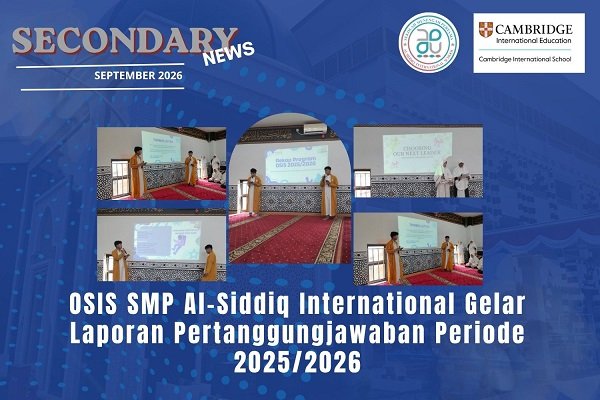
OSIS of Al-Siddiq International Secondary School Holds Accountability Report for the 2025/2026 Term

Bekasi, 28 August 2026 — Al-Siddiq International Secondary School held the Student Council (OSIS) Accountability Report (Laporan Pertanggungjawaban/LPJ) for the 2025/2026 term on Friday, 28 August 2026. The event took place on the second floor of the School Mosque and served as both an evaluation process and a valuable leadership-learning experience for students. The activity began with a morning dhikr session, followed by a tausiyah as part of the students’ spiritual development and character-building programme. After the religious activities had concluded, the programme continued with its main agenda: the OSIS Accountability Report for the 2025/2026 term. The report was presented by the OSIS President, Azka Fakhri Arkananta, together with the OSIS Vice President, Muhammad Kautsar Mehaga Perangi, under the guidance of the OSIS advisers, Mr Amal Zikrullah, M.Pd. and Mrs Diah Santikawati, S.Pd. During the forum, the OSIS committee presented a report on the various work programmes that had been planned and implemented throughout their term of office. The report served as a form of accountability to the school, OSIS members, and advisers for the responsibilities and trust entrusted to them during the 2025/2026 term. Following the presentation, OSIS members and the advisers took part in an evaluation process and formally received the accountability report. This provided all members with an opportunity to review the achievements of the programmes, the challenges encountered, and the areas requiring attention and improvement for the next OSIS administration. One of the flagship programmes of the 2025/2026 OSIS administration was the creation of opportunities for students at Al-Siddiq International Secondary School to develop their creativity. OSIS sought to provide a platform for students to express their ideas, talents, interests, and abilities through various activities within the school environment. In addition, OSIS played an active role in enlivening various national and religious celebrations, as well as important school occasions, with OSIS committee members involved in organising and implementing the activities. Such involvement provided students with practical experience in planning events, distributing responsibilities, coordinating with one another, working as a team, and completing responsibilities collectively. The LPJ was not merely an administrative organisational agenda, but also an integral part of character education and student leadership development. Through their organisational experience, students learnt that leadership is not simply about implementing programmes, but also about fulfilling a trust, demonstrating responsibility, maintaining transparency, conducting evaluations, and being prepared to account for every responsibility entrusted to them. The programme, which began with morning dhikr and a tausiyah, also conveyed an important message: leadership at Al-Siddiq International Secondary School is developed not only through organisational skills, but also through spiritual growth and character development. A leader is expected to be able to work and collaborate effectively, while also demonstrating strong moral values, integrity, and a sense of responsibility. The OSIS advisers expressed their appreciation for the contributions and hard work of all committee members throughout the term. The achievements accomplished during the year were valuable milestones to be appreciated and celebrated, while the shortcomings and challenges identified served as important lessons for building a stronger organisation in the future. With the completion of this accountability report, the 2025/2026 OSIS administration has successfully completed one of the important stages in its organisational journey. The experience gained throughout the term is expected to become a valuable foundation for the students as they continue to develop their leadership abilities and make positive contributions to the school community. The activity also formed part of the process of student leadership regeneration, ensuring that the spirit of creativity, responsibility, collaboration, and care for the school can continue to be carried forward by the next generation of student leaders. Through dhikr and tausiyah, students strengthen their values. Through organisation, they learn to lead. And through accountability, they learn to become leaders who uphold their trust and responsibilities.By Retno Suzanne Handayani, Lc, M.Pd

Kegiatan, SMP

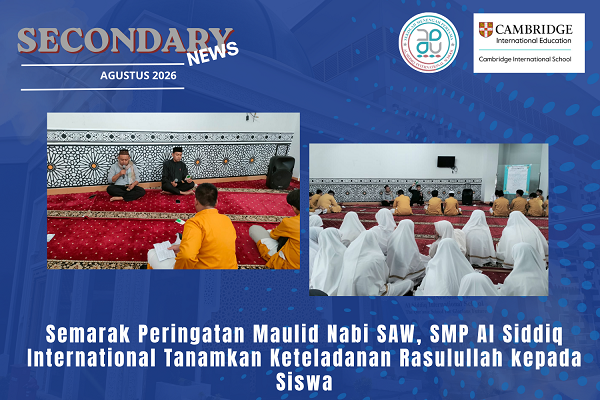
Celebrating the Maulid of Prophet Muhammad (PBUH): Al Siddiq International Secondary School Instils the Prophet’s Exemplary Character in Students

Al Siddiq International Secondary School held a Maulid celebration commemorating the birth of Prophet Muhammad (PBUH) on Friday, 28 August 2026. The event took place on the second floor of the Al Siddiq International Secondary School Mosque and was attended by all students and members of the school’s academic community. The Maulid celebration served as a meaningful opportunity for the entire school community to remember the birth of Prophet Muhammad (PBUH), whilst nurturing love and admiration for the Prophet and encouraging students to follow his exemplary character in their everyday lives. The programme began with the Duha prayer in congregation, followed by morning dhikr. The atmosphere became even more solemn as all participants listened to a religious lecture featuring Islamic guidance and reflections on the exemplary character and teachings of Prophet Muhammad (PBUH). The programme continued with the recitation of Maulid Diba’, which was enthusiastically joined by all participants. The recitation of salawat and praises of Prophet Muhammad (PBUH) created a deeply spiritual atmosphere throughout the celebration. The event concluded with a collective prayer. The students’ enthusiasm was evident throughout the programme. They participated in every activity in an orderly and wholehearted manner. The event was not merely a ceremonial celebration of the Maulid, but also served as an important means of character education and the cultivation of Islamic values within the school environment. Through the commemoration of the Maulid of Prophet Muhammad (PBUH), Al Siddiq International Secondary School hopes that students will become more familiar with the life and character of the Prophet, develop a deeper love for him, and strive to emulate his qualities and noble character in their daily lives — at school, at home, and within the wider community. “Commemorating the Maulid of the Prophet is not merely about remembering his birth, but about nurturing our love for him and bringing his exemplary character into our daily lives.” With the spirit of the Maulid celebration, the Al Siddiq International Secondary School community remains committed to nurturing a generation that is not only excellent in knowledge and academic achievement, but also possesses noble character, a deep love for Prophet Muhammad (PBUH), and strong Islamic values.By Retno Suzanne Handayani, Lc, M.Pd