Al Siddiq International School

February 26, 2026

Aktivitas, Edukasi, Sekolah

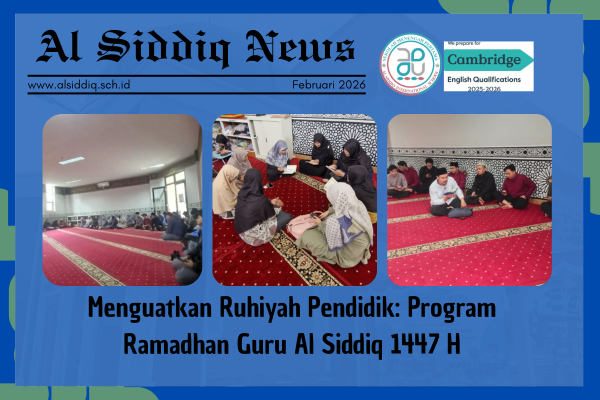
Strengthening the Spiritual Foundation of Educators: The Teachers’ Ramadan Programme at Al Siddiq

In welcoming and filling the blessed month of Ramadan 1447H with meaningful activities, Al Siddiq International School has organised a special programme for teachers entitled the Al Siddiq Teachers’ Ramadan Programme. The activities are held daily from 23 February to 11 March 2026, from 1.00 p.m. to 2.00 p.m. (WIB), at Masjid Al Siddiq. This programme is designed as a platform for strengthening the spiritual well-being (ruhiyah) of educators, ensuring that Ramadan becomes not only a time for personal worship, but also an opportunity to enhance their character and commitment as teachers and role models for students. Ramadan Tausiyah: Refreshing the Heart and Mind One of the main highlights of the programme is the Ramadan Tausiyah delivered by Ustadz Abdullah Haris, Lc., M.Pd. In his reflections, he addresses themes such as the virtues of Ramadan, sincerity in good deeds, and the role of teachers as educators who not only impart knowledge but also instil values and noble character. Through these sessions, teachers are encouraged to view Ramadan as a school of self-improvement and a means of strengthening their dedication to nurturing a Qur’anic generation. Congregational Qur’an Recitation (Tadarus) In addition to the tausiyah sessions, the programme includes congregational Qur’an recitation. The serene atmosphere of Masjid Al Siddiq resonates with the collective recitation of the holy verses by the teachers. This activity aims not only to increase the quantity of recitation, but also to cultivate unity and togetherness in righteousness. The congregational tadarus becomes a moment of reflection and contemplation, reminding educators that the Qur’an is the primary source of inspiration in fulfilling their responsibility as teachers. Tahsin Learning in Halaqah Groups To enhance the quality of Qur’anic recitation, the programme also features tahsin (recitation improvement) sessions conducted in small halaqah groups. Each group is guided by a musyrif from among the asatidz (male and female teachers) of Al Siddiq. Within this more focused and structured setting, teachers work on improving pronunciation (makharijul huruf), rules of tajwid, and fluency. The halaqah system enables more personalised and effective guidance, ensuring that each participant receives support according to their individual needs. Rotational Activities, Consistent Commitment The activities rotate daily between tausiyah sessions, congregational tadarus, and tahsin learning. This format ensures that the programme remains dynamic and engaging, sustaining participants’ enthusiasm throughout Ramadan. With a duration of one hour each day following teaching activities, the programme serves as a spiritual oasis amidst the teachers’ busy schedules. Ramadan as a School for Educators The Al Siddiq Teachers’ Ramadan Programme demonstrates that the enhancement of educational quality begins with the development of its educators. Teachers who are spiritually grounded are better prepared to guide, inspire, and instil noble values in their students. May this programme draw teachers closer to the Qur’an, strengthen their character, and deepen their sincerity in carrying out their noble trust as educators. Ramadan is not only a month of worship, but also a month of growth and refinement—for both students and the teachers who lead by example.By Arief Firmansyah, S.Kom
Edukasi

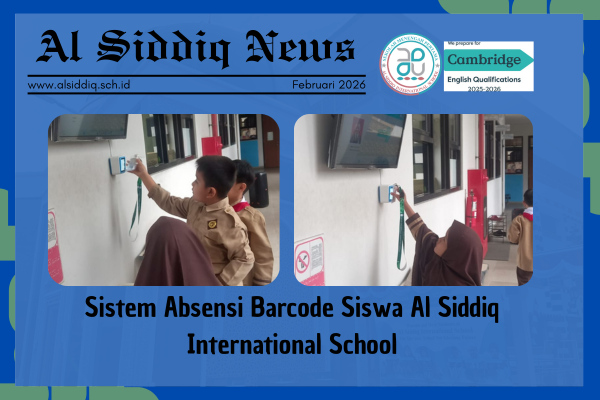
Digital Transformation in Schools: Student Barcode Attendance System at Al Siddiq International School

In today’s rapidly advancing digital era, Al Siddiq International School has introduced an innovative approach to school administration through a barcode-based digital attendance system. This programme utilises the Madani School System as its main platform, integrating student attendance data in real time in a transparent and efficient manner. Practical, Fast, and Accurate Each student is provided with an identification card equipped with a unique barcode. Upon arrival at school, students simply scan their barcode using the designated device. Within seconds, their attendance is automatically recorded in the system without the need for manual entry. This method not only accelerates the attendance process but also minimises recording errors and enhances data accuracy. The automated system enables the school to monitor student punctuality and attendance more effectively. Instant Reports for Parents One of the key advantages of this system is the automatic notification feature for parents. Whenever a student scans in upon arrival or departure, an attendance report is immediately sent to parents via the Madani School System application. This allows parents to be promptly informed of their child’s arrival and departure times. This feature provides reassurance and peace of mind for parents, while also strengthening communication between the school and families. The transparency of attendance data reflects the school’s accountability in ensuring students’ safety and discipline within the educational environment. Encouraging Discipline and Digital Literacy The implementation of digital attendance serves not only as an administrative tool but also as an educational medium. Students learn to be more disciplined in managing their time and to take responsibility for their attendance. At the same time, the structured use of technology fosters positive digital literacy from an early age. For the school administration, the system simplifies the compilation of daily, weekly, and termly attendance reports. The systematically stored data also supports more informed decision-making in student development and guidance. A Commitment to a Modern and Transparent School Environment The implementation of the barcode-based digital attendance system through the Madani School System demonstrates Al Siddiq International School’s commitment to delivering modern, efficient, and transparent educational services. This innovation aligns with the school’s vision of integrating Islamic values with technological advancement. With an integrated and responsive system in place, the school and parents can now collaborate more effectively in monitoring students’ progress and discipline. Attendance is no longer merely a daily routine, but part of a broader digital transformation that supports a safe, orderly, and professional learning environment.By Arief Firmansyah, S. Kom

Sekolah

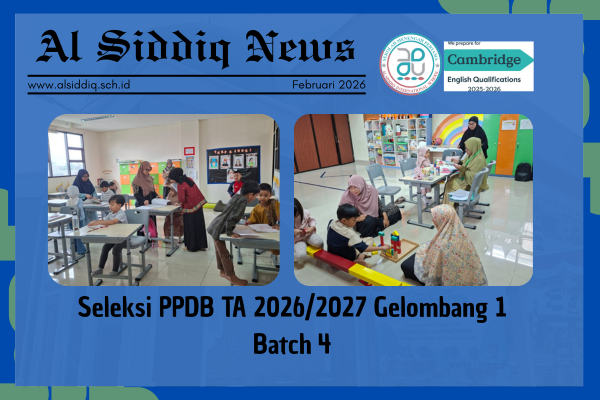
Academic Assessment and Observation for Admissions 2026/2027: Prospective Students of Al Siddiq International School

On Saturday, 7 February 2026, Al Siddiq International School conducted its Academic Assessment and Observation sessions as part of the New Student Admissions (PPDB) process for the 2026/2027 Academic Year. The event was attended by prospective students applying for Kindergarten, Primary School, and Junior High School levels. From early morning, the school grounds were filled with prospective students arriving with their parents. With expressions of enthusiasm and anticipation, the participants prepared to undergo the selection stages designed to assess their academic readiness while also identifying each child’s individual potential in a holistic manner. Academic Assessment For Primary and Junior High School applicants, the academic assessment covered fundamental subjects appropriate to their developmental stage, including literacy, numeracy, and basic conceptual understanding. The questions were carefully designed to evaluate logical thinking skills, comprehension of instructions, and readiness to engage in learning within an international-standard educational environment. Meanwhile, for Kindergarten applicants, the approach was more simple and engaging. The assessment focused on basic skills such as recognising letters and numbers, communication abilities, and overall readiness to participate in classroom activities. Observation and Interview Sessions In addition to the academic assessment, the school conducted observation sessions. During these sessions, examiners observed various aspects of child development, including independence, social interaction, concentration, and responsiveness to teachers’ instructions. For Kindergarten applicants, observations were carried out through guided play activities to ensure that the children felt comfortable and relaxed. For Primary and Junior High School applicants, interview sessions were also conducted to explore learning motivation, interests, and family support. Parents were given the opportunity to engage in discussions with the school representatives to gain a clearer understanding of the school’s vision, mission, and flagship programmes. A Holistic and Child-Friendly Selection Process The admissions process at Al Siddiq International School is not solely focused on academic results; it also considers students’ mental readiness, character, and long-term developmental potential. This approach reflects the school’s commitment to nurturing a generation that excels not only intellectually, but also spiritually grounded and strong in character. The entire series of activities was conducted in an orderly and supportive atmosphere. The committee members and teachers worked to create a welcoming environment so that children felt confident throughout the assessment. Parents likewise appreciated the transparent and professional selection process. Through the Academic Assessment and Observation sessions for the 2026/2027 Admissions, it is hoped that Al Siddiq International School will identify prospective students who are ready to grow and thrive within an excellent, character-driven, and faith-based educational environment.By Arief Firmansyah, S. Kom

Kegiatan, TK

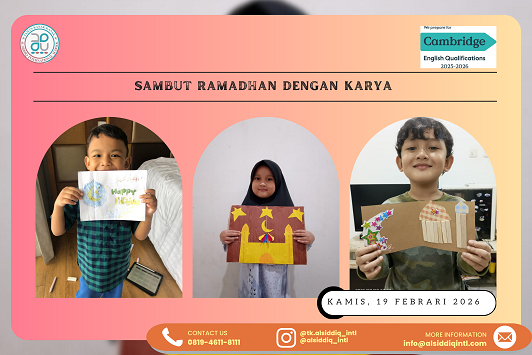
Welcoming Ramadan with Creativity: Online Activities of Al Siddiq International Kindergarten Pupils

On Wednesday and Thursday, 18 and 19 February 2026, pupils of Al Siddiq International Kindergarten carried out online learning through the school’s Learning Management System (LMS). The activities were completed from home by working on and submitting assignments in the form of videos via the LMS platform provided by the school. Although it was the holiday period leading up to the fasting month, the learning process continued in a more flexible and creative manner. Previously, on Monday, 16 February 2026, the class teacher had informed parents about the online learning plan. The announcement explained in detail the tasks the children were required to complete, along with clear instructions and submission deadlines. Parents were asked to accompany their children during the task preparation process and to assist with recording and uploading the videos to the LMS. On Wednesday, the children were assigned to create a video message welcoming the month of Ramadan. Through this activity, they learnt to deliver simple sentences confidently while understanding the significance of the arrival of the holy month. Each child recorded their greeting video in their own unique style and expression. Some appeared shy with sweet smiles, while others enthusiastically conveyed their prayers and hopes for Ramadan. On Thursday, the task continued with the creation of a Ramadan card. The children were encouraged to be creative by designing a Ramadan-themed card using materials available at home. The entire process was recorded on video, starting from preparing the tools and materials, decorating the card, to presenting the final result. After completing their craft, the children also made a simple presentation video to explain their work. This activity helped develop creativity, fine motor skills, and confidence in speaking in front of the camera. The use of the LMS with a video submission system served several important purposes. Firstly, it ensured that learning activities remained structured despite the pre-Ramadan holiday. Secondly, it nurtured independence and responsibility in completing tasks. Thirdly, it strengthened collaboration between the school and parents in supporting learning at home. Furthermore, the use of the LMS helped both children and parents become more accustomed to using technology in a positive and purposeful way. Through these activities, the atmosphere of welcoming Ramadan became more meaningful. The children were not merely on holiday; they continued to learn, create, and understand religious values in an enjoyable way. Online learning through the LMS proved to be an effective alternative for maintaining enthusiasm for learning while preparing to welcome the holy month with joyful hearts.By Inka Amalia, S. Pd

Sekolah

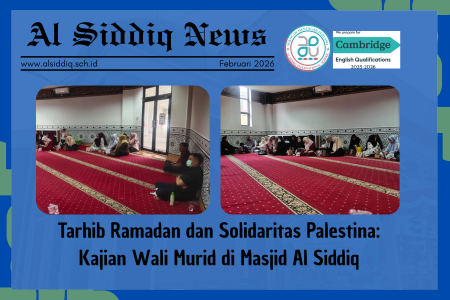
Welcoming Ramadan and Standing in Solidarity with Palestine: Parents’ Study Gathering at Masjid Al Siddiq

On Thursday, 5 February 2026, the atmosphere at Masjid Al Siddiq was warm and serene as parents gathered for a special study session centred on Tarhib Ramadan—preparing to welcome the blessed month. The event served as a meaningful opportunity to strengthen spiritual awareness while fostering closer bonds between parents, teachers, and the wider school community. The session was delivered by Ustadz Abdul Haris, Lc., M.Pd, who spoke about the importance of welcoming Ramadan with preparation in faith, knowledge, and good deeds. In his reminder, he emphasised that Ramadan is not merely an annual routine, but a powerful momentum for self-transformation. Tarhib Ramadan means greeting the holy month with a heart full of longing, thoughtful preparation, and a sincere commitment to improving the quality of one’s worship. He encouraged parents to begin preparing themselves and their families from now—by improving the quality of daily prayers, increasing recitation of the Qur’an, guarding their speech, and creating a home environment conducive to worship. Parents, he highlighted, play a central role as role models in nurturing their children’s love for Ramadan. With proper preparation, it is hoped that Ramadan will not simply pass by, but will leave a lasting and meaningful transformation within each family. In addition to the religious talk, the gathering also included a fundraising initiative in solidarity with Palestine. Ustadz Azmi shared insights into the current situation faced by the Palestinian people and reminded attendees of the importance of compassion and unity as part of the Muslim brotherhood. He invited parents to take part in supporting the cause, both through heartfelt prayers and material contributions. Alhamdulillah, the appeal was met with heartfelt enthusiasm. With sincerity and generosity, parents participated in the fundraising effort as a tangible expression of care and solidarity. This moment served as a reminder that Ramadan is not only about enhancing personal worship, but also about expanding social responsibility and sharing with those in need—particularly those enduring hardship and trials. It is hoped that this parents’ study gathering will become a meaningful first step in welcoming Ramadan 1447H with greater spiritual and social readiness. May the spirit of Tarhib Ramadan cultivated during this session continue to flourish in every home, nurturing families who are closer to Allah SWT and more sensitive to the needs of the wider Ummah.By Arief Firmansyah, S. Kom

Kegiatan, SMP

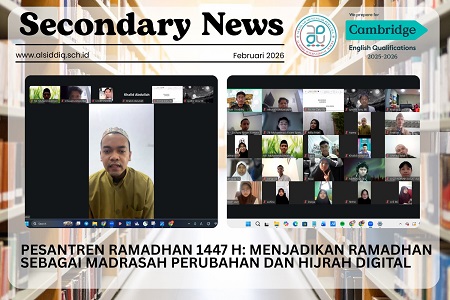
Ramadan Boarding Programme 1447H: Making Ramadan a School of Transformation and Digital Hijrah

In order to fill the blessed month of Ramadan 1447H with meaningful activities, the Junior High School organised a three-day Ramadan Boarding Programme from Wednesday to Friday, 18–20 February 2026. The programme was attended by all Year 7 to Year 9 students and was conducted online via Zoom. Although delivered virtually, the programme ran in an orderly, interactive, and spirited manner. The students participated enthusiastically in every session as a reflection of their commitment to making Ramadan a momentum for self-improvement. Day One The first day’s session was delivered by Ust. Ahmad Toha, M.Ag, under the theme:“Ramadan: A Month for Self-Upgrade, Not Merely Hunger and Thirst.” In his talk, he emphasised that fasting is not only about refraining from food and drink, but also about training patience, refining character, and improving the quality of worship. Ramadan is the best time to “level up” oneself to become more disciplined, more courteous, and closer to Allah SWT. He also encouraged students to make Ramadan a turning point for improving daily habits — from performing prayers punctually, increasing Qur’an recitation, to guarding one’s speech and behaviour in social interactions. Day Two The second day’s session was delivered by Ust. Abdul Aziz, S.Pd, with the theme:“Ramadan: A School of Transformation.” In his presentation, he explained that Ramadan is a school of life that teaches self-control, responsibility, and consistency in doing good deeds. The values learnt during Ramadan should not cease once the holy month ends, but should instead become lasting traits embedded within a Muslim student’s character. He stressed the importance of integrity, proper manners towards parents and teachers, maintaining daily acts of worship, and treating Ramadan as a training ground for all parts of the body — the eyes, tongue, ears, and heart. He also encouraged students to sustain their enthusiasm for learning and achieving excellence as part of positive transformation. Day Three On the final day, the session was delivered by Ustz. Retno Suzanne Handayani, Lc., M.Pd, under the theme:“Heart Detox, Gadget Detox: From Scroll to Sujud — Digital Hijrah in the Holy Month.” In her session, she invited students to detoxify their hearts from laziness, anger, and negligence, as well as to detox from excessive use of gadgets and social media. Ramadan is the ideal time to transform the habit of “endless scrolling” into “meaningful prostration.” She highlighted that digital hijrah does not mean abandoning technology, but rather using it wisely, productively, and in ways that carry spiritual value. This message was especially relevant to teenagers living in today’s digital era. Interactive Quiz and Appreciation As a closing activity, the committee organised an interactive quiz covering material from Day One to Day Three. The session was lively and engaging, as students competed to answer questions quickly and accurately using Zoom’s interactive features. The students who achieved the highest scores in the Ramadan Boarding Programme 1447H quiz were: Richie, Shafa, Salma, Alvaro, and Kenzie. It is hoped that this Ramadan Boarding Programme will help nurture a generation that excels not only academically, but also possesses spiritual strength, strong character, and wisdom in using technology. May this year’s Ramadan truly become a school of transformation and the beginning of a meaningful hijrah towards becoming better individuals.By :Retno Suzanne Handayani,Lc.M.Pd

Kegiatan, TK, Uncategorized

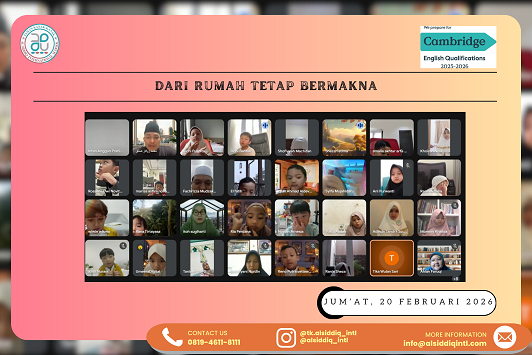
Meaningful Learning from Home: Online Classes at Al Siddiq International Kindergarten

On Friday, 20 February 2026, pupils of Al Siddiq International Kindergarten took part in online learning via Google Meet. The activity was held as the day formed part of the holiday period leading up to the fasting month. Although they were not physically present at school, the children were still able to meet their class teachers and friends through the screen. The learning atmosphere remained warm and enjoyable, even though it was conducted from their respective homes. This distance learning programme aimed to ensure that the learning process continued uninterrupted, despite the approaching holiday before Ramadan. In addition, the activity served as a way to maintain the children’s enthusiasm for learning. By staying connected online, the children were able to maintain positive habits such as reciting prayers before lessons and performing murojaah (revision of Qur’anic memorisation). The online sessions also helped parents stay informed about the school’s programmes, particularly in preparation for important activities during Ramadan. At 7:45 a.m., the class teacher shared the Google Meet link with all parents through the class communication group. The children then prepared to join the lesson from their homes. Promptly at 8:15 a.m., the session began with the recitation of the opening prayer before studying. This was followed by a collective murojaah session until 8:45 a.m. Even though it was conducted virtually, the children participated enthusiastically and with great spirit. After the murojaah session concluded, the activities resumed at 9:00 a.m. via the same Google Meet link. During this session, the class teacher held a briefing for parents. The topics covered included the tasmi’ and munaqosyah programmes at the kindergarten, the schedule of activities during Ramadan, and an explanation regarding the attendance card. This briefing was important to ensure that parents clearly understood the sequence of programmes to be carried out and could provide proper support for their children at home. Through this online learning initiative, communication between the school and families remained well maintained. The children continued to receive both spiritual and academic guidance despite being on holiday. Parents were also better prepared to support the school’s programmes ahead of Ramadan. This simple activity conducted via Google Meet stands as proof that learning can continue anytime and anywhere, as long as there is strong cooperation between teachers, pupils, and parents.By Inka Amalia, S. Pd