Al Siddiq International School

October 12, 2026

Kegiatan, TK

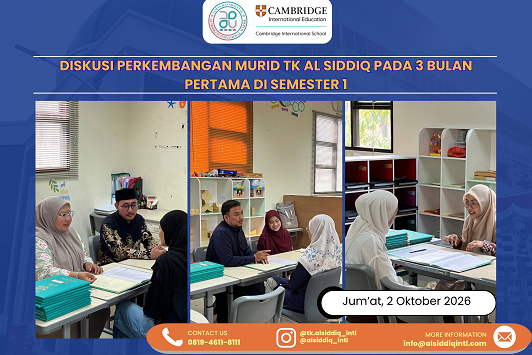
Discussing TK Al Siddiq Students’ Development During the First Three Months of Semester 1

On Friday, 2 October 2026, TK Al Siddiq International held its Mid-Semester 1 Report Card Distribution for all students. The activity took place in each classroom and involved teachers and parents or guardians. This report card distribution was an important opportunity for the school and families to reflect on and better understand the children’s development during their first three months of learning at school.The report card distribution was not merely an occasion to communicate learning outcomes, but also an opportunity for teachers and parents to discuss each child’s progress directly. Through these meetings, parents gained an overview of their children’s learning processes, abilities, and development throughout various school activities. Two-way communication between teachers and parents was expected to support more appropriate and continuous guidance for every child.To ensure that the activity ran smoothly and comfortably, parents arrived according to their previously agreed appointment times. Upon arrival, parents or guardians first met with their respective homeroom teachers. During this session, the homeroom teachers presented and discussed the children’s academic reports, including their progress throughout classroom learning activities.After meeting with the homeroom teachers, parents continued with a session alongside the Qur’an teachers. This session focused specifically on the children’s progress in Qur’an learning. The Qur’an report covered several aspects, including Tahfidz (Qur’an memorisation), Tahsin (improving Qur’an recitation), and the ability to recite various prayers that the children had learnt during their first three months at school.In the Tahfidz aspect, teachers shared updates on the children’s Qur’an memorisation progress in accordance with the lessons provided. Meanwhile, in Tahsin, parents received information about their children’s developing ability to recite the Qur’an correctly and properly, according to their individual learning stages. The discussion also covered the children’s progress in reciting prayers, including hadith and short supplications they had learnt.Through the Mid-Semester 1 report card distribution, the school hopes that parents will not only become aware of their children’s progress, but also gain a better understanding of the learning journey they have undertaken at school. Every child develops at their own pace and has unique characteristics. Therefore, report cards serve as a means of recognising achievements while identifying the next steps for appropriate guidance and support.This activity also demonstrated the importance of collaboration between the school and families in supporting children’s growth and development. Through open communication among homeroom teachers, Qur’an teachers, and parents, every child is expected to receive guidance suited to their individual needs, both in academic learning and in Qur’an education and Islamic values.The Mid-Semester 1 Report Card Distribution at TK Al Siddiq International provided a valuable opportunity for the school and parents to appreciate every stage of the children’s learning journey and achievements during their first three months. May this collaboration continue to grow stronger, enabling the children to develop into confident, well-rounded individuals who flourish in a supportive learning environment. By Inka Amalia, S.Pd
Kegiatan, SD, Uncategorized

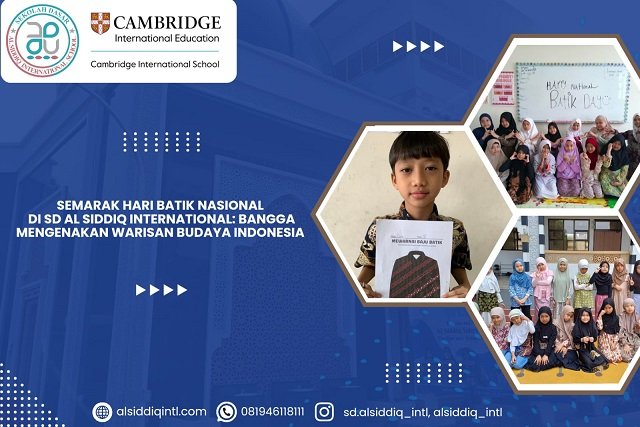
Celebrating National Batik Day at SD Al Siddiq International: Proud to Wear Indonesia’s Cultural Heritage

To commemorate National Batik Day, which fell on Friday, 2 October 2026, the SD Al Siddiq International community joined in the celebration by wearing batik clothing. This simple yet meaningful activity was an opportunity to nurture students’ love, pride, and appreciation for Indonesian culture from an early age.From the morning, the school was filled with a more vibrant atmosphere as students and teachers arrived wearing batik in a variety of patterns and colours. The beautiful designs created a cheerful setting while showcasing the richness and diversity of Indonesian culture. The students also appeared enthusiastic and confident as they wore batik during their learning activities at school.National Batik Day is not merely about wearing clothing with batik patterns; it is also an opportunity for students to become more familiar with one of Indonesia’s cultural treasures and a significant part of the nation’s identity. Batik has a long and rich history, reflecting artistic values, creativity, and philosophy. Different regions across Indonesia have their own distinctive batik patterns and characteristics, making batik a wonderful representation of the cultural diversity of the Indonesian archipelago.Through this activity, students were encouraged to understand that preserving culture can begin with simple actions in everyday life. Wearing batik is one way to show appreciation for the nation’s cultural heritage. Students can also learn to value the creative process, artistic expression, and craftsmanship of batik artisans, who produce these beautiful works with great care, precision, and patience.Wearing batik also formed part of character education at SD Al Siddiq International. The school strives not only to provide academic education, but also to develop students’ character so that they become confident individuals who appreciate diversity, love their culture, and take pride in being part of the Indonesian nation. These values are important to nurture from an early age, helping children grow into open-minded individuals who remain firmly connected to their cultural roots.The cheerful atmosphere grew even warmer as students and teachers wore batik together, creating a strong sense of togetherness throughout the school. The occasion provided an opportunity to strengthen the bonds among members of the school community. It also helped students realise that Indonesian culture is closely connected to their everyday lives and can be celebrated in enjoyable and meaningful ways.The National Batik Day celebration also taught students that preserving cultural heritage is not solely the responsibility of the government or artists, but a shared responsibility. Young people have an important role to play in ensuring that Indonesian culture continues to thrive. By learning about, wearing, appreciating, and introducing batik to others, children can contribute to preserving this cultural heritage so that it remains known, valued, and loved by future generations.For SD Al Siddiq International, this activity is expected to provide students with a simple yet memorable positive experience. The spirit of wearing batik should not end with a single commemorative day, but should inspire students to appreciate Indonesian culture as part of their everyday lives.Through the spirit of National Batik Day 2026, SD Al Siddiq International continues to encourage students to become knowledgeable, confident, well-rounded individuals who take pride in their national culture. May their love for batik and Indonesian cultural heritage continue to grow and become an important part of their journey towards discovering and preserving the richness of the Indonesian archipelago.Happy National Batik Day 2026!Proud to Wear Batik, Proud to Preserve Indonesian Culture. By Muslihatul Maula, Lc

Kegiatan, SMP

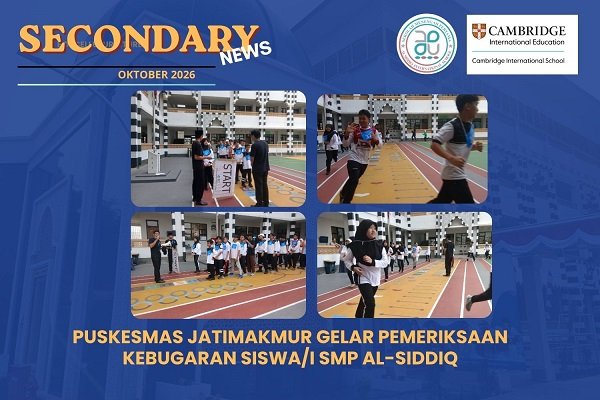
Jatimakmur Community Health Centre Conducts Student Fitness Assessments at SMP Al-Siddiq International

Bekasi, 30 September 2026 — SMP Al-Siddiq International once again organised an activity to support students’ health and physical fitness through a fitness assessment in collaboration with Jatimakmur Community Health Centre (Puskesmas Jatimakmur) on Wednesday, 30 September 2026. The activity took place on the school field and was attended by students as part of the school’s ongoing efforts to raise awareness of the importance of maintaining good health and fitness from an early age.The activity provided students with an opportunity to assess their physical fitness through structured physical exercises. In addition to supporting health education, it also gave students practical experience of the importance of physical activity and a healthy lifestyle.Assessing Physical Fitness and EnduranceOne of the main activities in the fitness assessment was a running test, during which students were asked to complete 11 laps, covering a total distance of approximately 1,000 metres on the school field.The test was designed to provide an indication of students’ physical capabilities, particularly their cardiorespiratory endurance—the body’s ability to use oxygen effectively during physical activity.Throughout the activity, students were also encouraged to pay attention to their bodies’ responses to exercise, including changes in heart rate, breathing, fatigue, and their ability to sustain physical activity.In this way, students were not simply exercising; they were also learning to recognise how their bodies function when engaged in physical activity.Objectives of the Fitness AssessmentThe fitness assessment had several important objectives: