Al Siddiq International School

SMP

Kegiatan, SMP

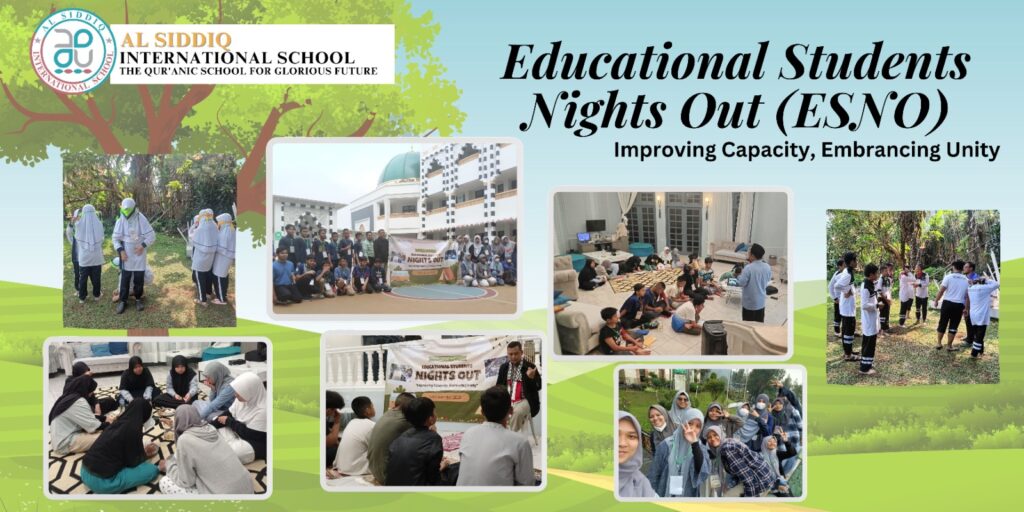
Eduactional Stundents Nights Out (ESNO): Fostering Leadership

Bekasi – November 2023, This November began with an outdoor activity for the pupils of Al Siddiq International Junior High School: the Educational Students Nights Out (ESNO). This was their very first overnight trip outside the city, designed to train pupils in leadership and independence. The two-day, one-night programme took place in the Puncak area, West Java. Pupils joined the activity without parental accompaniment, making it a valuable experience as they spent time together with their peers and teachers. The agenda included sessions on Latihan Dasar Kepemimpinan Siswa (Student Leadership Basic Training) and motivational talks, as well as a variety of leadership games to strengthen teamwork. There were also counselling sessions and qiyamul lail (night prayers). On the following morning, pupils took part in morning exercise, scout-related activities (hiking), and outdoor challenges. Alhamdulillah, the ESNO programme ran smoothly, and the pupils of Al Siddiq Junior High School thoroughly enjoyed their time together. It is hoped that this event will strengthen bonds among pupils, and between pupils and teachers, while also building self-confidence and motivating them to strive for even greater achievements in the future. [Red]By Esty Indraswariani, S.Sos
Kegiatan, SD, Sekolah, SMP, TK

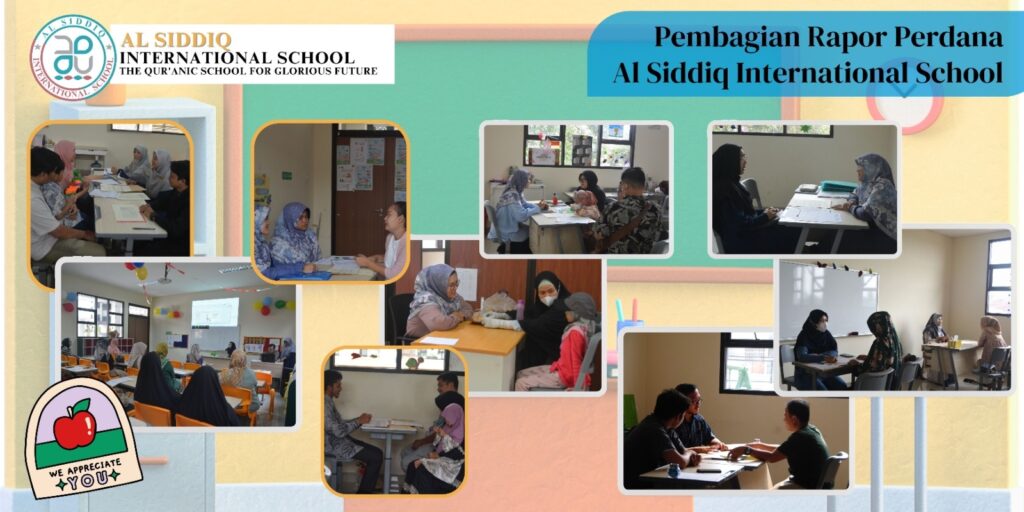
The First Student Report Card Distribution at Al Siddiq International School

Bekasi, October 2023, Following the Mid-Semester Summative Assessment (STS) for the Kindergarten, Primary, and Secondary units held from 18–22 September 2023, Al Siddiq International School conducted its very first report card distribution on Saturday, 14 October 2023. The event took place in an orderly manner and was attended by both parents and pupils. In the Kindergarten unit, before the distribution of report cards, there was a presentation of the pupils’ psychological test results. The presentation was delivered by Mrs Marwati, S. Psi, M. Psi, a psychologist as well as an expert in parenting and family studies. On this occasion, parents not only gained valuable insight into early childhood education but were also given the opportunity to consult directly regarding their children’s test results. The schedule, which began at 8 a.m., Alhamdulillah, ran smoothly. Parents had the chance to engage in direct discussions with class teachers and Qur’an teachers about their children’s development in class. It is hoped that the notes and discussions between teachers and parents during this first report card distribution will serve as a useful reference for improvements in the future. [Red]By Esty Indraswariani, S.Sos

Kegiatan, SMP

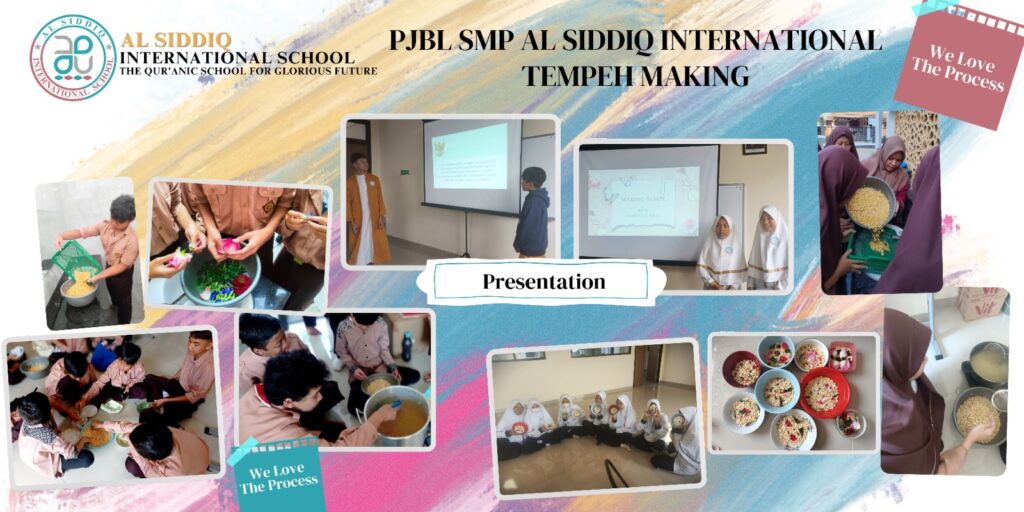
Tempeh Making

Tempe is known as a traditional food native to Indonesia. It has existed since the 16th century on the island of Java, and Indonesia is now one of the largest tempe producers in the world. Beyond being a side dish to rice, tempe is also processed into various snacks and regional delicacies that serve as local souvenirs. In implementing the Project-Based Learning (PJBL) model, the projects for secondary school students are naturally more complex than those for primary school students. The first project for Al Siddiq International Junior High School students this semester was to make their own tempe — from preparing the ingredients to managing and tasting the final product. Given tempe’s close connection to everyday Indonesian life, many were curious: how exactly is tempe made? It turned out to be less complicated than expected! This was the experience of the Al Siddiq International students. From washing the soybeans, boiling, drying, and storing them in containers for fermentation, each group carried out the process independently. Why the title “Tempe à la Al Siddiq”? Is there any significant difference between ordinary tempe and the one made by the Year 7 students of Al Siddiq International? As it turns out, yes, there is. The students’ version of tempe included flowers as an additional ingredient besides soybeans. Butterfly pea flowers, roses, moringa leaves, and nori (seaweed) were used as extra natural additives. So, how did it turn out? Alhamdulillah, the process went smoothly and successfully. The resulting tempe had a more fragrant aroma and a distinct taste thanks to the combination of nori and moringa leaves. At the end of the PJBL project, the students were required to present their process and results. Through this experience, it is hoped that one day the students will be able to develop tempe into a unique, innovative, and marketable product.By Esty Indraswariani, S.Sos